A request that this article title be changed to Timeline of the name Palestine is under discussion. Please do not move this article until the discussion is closed. |
This article presents a list of notable historical references to the name Palestine as a place name in the Middle East throughout the history of the region, including its cognates such as "Filastin" and "Palaestina."
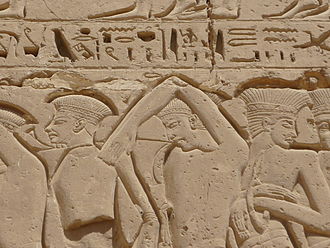
The term "Peleset" (transliterated from hieroglyphs as P-r-s-t) is found in five inscriptions referring to a neighboring people or land starting from circa 1150 BC during the Twentieth Dynasty of Egypt. The first known mention is at the Medinet Habu temple which refers to the Peleset among those who fought against Egypt during Ramesses III's reign, [2] and the last known is 300 years later on Padiiset's Statue. The Assyrians called the same region "Palashtu/Palastu" or "Pilistu," beginning with Adad-nirari III in the Nimrud Slab in c. 800 BC through to an Esarhaddon treaty more than a century later. [3] [4] Neither the Egyptian nor the Assyrian sources provided clear regional boundaries for the term. [5]
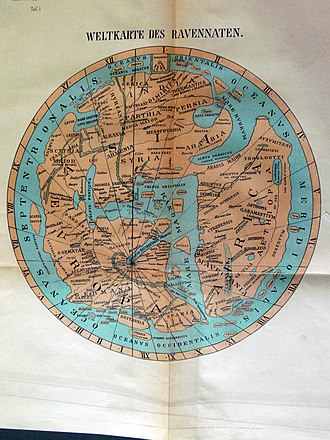
The term "Palestine" first appeared in the 5th century BC when the ancient Greek historian Herodotus wrote of a "district of Syria, called Palaistinê" between Phoenicia and Egypt in The Histories . [6] Herodotus applied the term to both the coastal and the inland regions such as the Judean mountains and the Jordan Rift Valley. [7] [8] [9] [10] Later Greek writers such as Aristotle, Polemon and Pausanias also used the word, which was followed by Roman writers such as Ovid, Tibullus, Pomponius Mela, Pliny the Elder, Dio Chrysostom, Statius, Plutarch as well as Roman Judean writers Philo of Alexandria and Josephus. [11] The word is not found on any Hellenistic coin or inscription, and is first known in official use in the early second century AD. [12]
In 135 AD, the Greek "Syria Palaestina" [lower-alpha 1] was used in naming a new Roman province from the merger of Roman Syria and Roman Judaea after the Roman authorities crushed the Bar Kokhba Revolt. Circumstantial evidence links Hadrian to the renaming of the province, which took place around the same time as Jerusalem was refounded as Aelia Capitolina, but the precise date of the change in province name is uncertain. [13] The common view that the name change was intended to "sever the connection of the Jews to their historical homeland" is disputed. [14] [15]
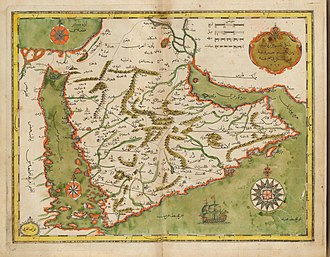
Around the year 390, during the Byzantine period, the imperial province of Syria Palaestina was reorganized into Palaestina Prima, Palaestina Secunda [16] and Palaestina Salutaris. [16] Following the Muslim conquest, place names that were in use by the Byzantine administration generally continued to be used in Arabic. [3] [17] The use of the name "Palestine" became common in Early Modern English, [18] was used in English and Arabic during the Mutasarrifate of Jerusalem. In the 20th century the name was used by the British to refer to "Mandatory Palestine," a territory from the former Ottoman Empire which had been divided in the Sykes–Picot Agreement and secured by Britain via the Mandate for Palestine obtained from the League of Nations. [19] Starting from 2013, the term was officially used in the eponymous "State of Palestine." [20] Both incorporated geographic regions from the land commonly known as Palestine, into a new state whose territory was named Palestine.
Writers during this period also used the term Palestine to refer to the entire region between Syria and Egypt, with numerous references to the Jewish areas within Palestine. [53] [54] It has been contended that some first century authors associated the term with the southern coastal region. [55] [56]
⟨1650⟩
⟨1750⟩
⟨1850⟩
⟨1900⟩
Palaistinê (whence Palaestina, from which Palestine is derived) [393] is generally accepted to be a translation of the Biblical name Peleshet (פלשתPəlésheth, usually transliterated as Philistia). Peleshet and its derivates are used more than 250 times in Masoretic-derived versions of the Hebrew Bible, [394] [395] of which 10 uses are in the Torah, with undefined boundaries, and almost 200 of the remaining references are in the Book of Judges and the Books of Samuel. [3] [11] [396] The first use is found in Genesis 10, in the Generations of Noah. [397]
By the time the Septuagint was translated the term Palaistínē (Παλαιστίνη), first used by Herodotus, had already entered the Greek vocabulary. However, it was not used in the LXX – instead the term Land of Phylistieim (Γη των Φυλιστιειμ) is used. [398] The Septuagint instead used the term "allophuloi" (Αλλόφυλοι, "other nations") throughout the Books of Judges and Samuel, [399] [400] such that the term "Philistines" has been interpreted to mean "non-Israelites of the Promised Land" when used in the context of Samson, Saul and David, [401] and Rabbinic sources explain that these peoples were different from the Philistines of the Book of Genesis. [399]
The five books of the Pentateuch / Torah include a total of 10 references, including: [402] [395]
The Historical books (see Deuteronomistic history) include over 250 references, almost 200 of which are in the Book of Judges and the Books of Samuel, including: [402] [395]
Wisdom books include only 6 references, all in the Psalms, including: [402] [395]
Books of the Major prophets and Minor prophets include around 20 references, including: [402] [395]
Per Martin Noth, the name likely comes from the Aramaic word for Philistine. Noth also described a strong similarity between the word Palestine and the Greek word "palaistês" (wrestler/rival/adversary), which has the same meaning as the word "Israel." [403] This was expanded by David Jacobson to theorize the name being a portmanteau of the word for Philistines with a direct translation of the word Israel into Greek (in concordance with the Greek penchant for punning on place names. [404] [405]
a. †Coele-Syria
| Nomenclatures of Syria given by Strabo [408] | ||
|---|---|---|
| Primary | Cœlê-Syria & Seleucis-Syria & Phœnicia &c. &c. | Cœlê-Syria ≠ Cœlo-Syrians |
| Alternate | Cœlo-Syrians & Syrians & Phœnicians | Similar to nomenclature given by Herodotus |
b. †Syria Palaestina
c. †Achaemenid Empire
| Darius, Behistun (521 BC) | Herodotus, Histories 3.90-94 (Tribute list) | Darius, Naqš-i Rustam (492 BC?) | Herodotus, Histories 7.61-96 (Army list) (480/481 BC) | Xerxes, XPh (daiva inscription) | Arrian, Anabasis (on history of the 4th century BC) |
|---|---|---|---|---|---|
| Cappadocia | district III/c: Syrians, Phrygians | Cappadocia | Syrians (= Cappadocians) | Cappadocia | Cappadocia |
| district IV: Cilicians | Cilicia | Cilicia | |||
| Beyond the river | district V: Phoenicia; Palestina; Cyprus | Phoenicia; Palestina; Cyprus | Syria; Palestina | ||
| Egypt | district VI/a: Egypt | Egypt | Egypt | Egypt | Egypt |
Aelia Capitolina was a Roman colony founded by Emperor Hadrian in Jerusalem, which had been almost totally razed after the siege of 70 AD, during his trip to Judah in 129/130 AD. The foundation of Aelia Capitolina and the construction of a temple to Jupiter at the site of the former temple may have been one of the causes for the outbreak of the Bar Kokhba revolt in 132 AD. Aelia Capitolina remained as the official name until Late Antiquity and the Aelia part of the name transliterated to "Iliyā" was also used by the Umayyad Caliphate.
The Palestinian people, also referred to as Palestinians or Palestinian Arabs, are an ethnonational group comprising the modern descendants of the peoples who have lived in Palestine continuously over the centuries and who today are largely culturally and linguistically Arab.
Canaan (; Northwest Semitic: Kan‘ān; Arabic: كَنْعَانُ – knaʿn; Phoenician: 𐤊𐤍𐤏𐤍 – Kenāʿan; Hebrew: כְּנַעַן – Kənáʿan, in pausa כְּנָעַן – Kənā́ʿan; Biblical Greek: Χανααν – Khanaan; was a Semitic-speaking civilization and region in the Ancient Near East during the late 2nd millennium BC. The name "Canaan" appears throughout the Bible, where it corresponds to the Levant, in particular to the areas of the Southern Levant that provide the main setting of the narrative of the Bible: Phoenicia, Philistia, and the Land of Israel, among others.
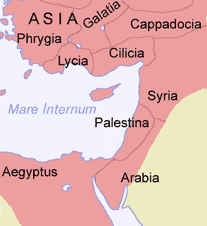
Syria Palaestina was the name given to the Roman province of Judea by the emperor Hadrian following the suppression of the Bar Kokhba revolt in 135 CE.
The Promised Land is the land which, according to the Tanakh, God promised and subsequently gave to Abraham and to his descendants. In modern contexts the phrase "Promised Land" expresses an image and idea related both to the restored homeland for the Jewish people and to salvation and liberation.
Over recorded history, there have been many names of the Levant, a large area in the Middle East, or its constituent parts. These names have applied to a part or the whole of the Levant. On occasion, two or more of these names have been used at the same time by different cultures or sects. As a natural result, some of the names of the Levant are highly politically charged. Perhaps the least politicized name is Levant itself, which simply means "where the sun rises" or "where the land rises out of the sea", a meaning attributed to the region's easterly location on the shore of the Mediterranean Sea.
Palestine is a geographic region in Western Asia usually considered to include Israel, the West Bank, the Gaza Strip, and in some definitions, parts of western Jordan.
Judea, sometimes spelled in its original Latin form Iudaea to distinguish it from the geographical region of Judea, was a Roman province which incorporated the regions of Judea, Samaria and Idumea, and extended over parts of the former regions of the Hasmonean and Herodian kingdoms of Judea. It was named after Herod Archelaus's Tetrarchy of Judea, but the Roman province encompassed a much larger territory. The name "Judea" was derived from the Kingdom of Judah of the 6th century BCE.
Coele-Syria alternatively Coelo-Syria or Coelosyria, was a region of Syria in classical antiquity. It probably derived from the Aramaic word for all of the region of Syria, but it was most often applied to the Beqaa Valley between the Lebanon and the Anti-Lebanon mountain ranges. The area is now part of the modern-day Syria and Lebanon.
Perea or Peraea, was the portion of the kingdom of Herod the Great occupying the eastern side of the Jordan River valley, from about one third the way down the Jordan River segment connecting the Sea of Galilee and the Dead Sea to about one third the way down the north-eastern shore of the Dead Sea; it did not extend very far to the east. Herod the Great's kingdom was bequeathed to four heirs, of which Herod Antipas received both Perea and Galilee. He dedicated the city Livias in the north of the Dead Sea. In 39 CE, Perea and Galilee were transferred from disfavoured Antipas to Agrippa I by Caligula. With his death in 44 CE, Agrippa's merged territory was made a province again, including Judaea and for the first time, Perea. From that time Perea was part of the shifting Roman provinces to its west: Judaea, and later Syria Palaestina, Palaestina and Palaestina Prima. Attested mostly in Josephus' books, the term was in rarer use in the late Roman period. It appears in Eusebius' Greek language geographical work, Onomasticon, but in the Latin translation by Jerome, Transjordan is used.
Islam is a major religion in Palestine, being the religion of the majority of the Palestinian population. Muslims comprise 85% of the population of the West Bank, when including Israeli settlers, and 99% of the population of the Gaza Strip. The largest denomination among Palestinian Muslims are Sunnis at 85% and another 14% are non-denominational Muslims.
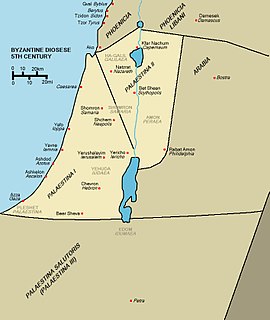
Palæstina Secunda or Palaestina II was a Byzantine province from 390, until its conquest by the Muslim armies in 634–636. Palaestina Secunda, a part of the Diocese of the East, roughly comprised the Galilee, Yizrael Valley, Bet Shean Valley and southern part of the Golan plateau, with its capital in Scythopolis. The province experienced the rise of Christianity under the Byzantines, but was also a thriving center of Judaism, after the Jews had been driven out of Judea by the Romans in the 1st and 2nd centuries.
The history of Palestine is the study of the past in the region of Palestine, defined as the territory between the Mediterranean Sea and the Jordan River. Strategically situated between three continents, Palestine has a tumultuous history as a crossroads for religion, culture, commerce, and politics. Palestine is the birthplace of Judaism and Christianity and has been controlled by many kingdoms and powers, including Ancient Egypt, Persia, Alexander the Great and his successors, the Roman Empire, several Muslim dynasties, and the Crusaders. In modern times, the area was ruled by the Ottoman Empire, then the United Kingdom and since 1948 it has been divided into Israel, the West Bank and the Gaza Strip.
Judea or Judaea is the ancient, historic, Biblical Hebrew, contemporaneous Latin, and the modern-day name of the mountainous southern part of the region of Israel and part of the West Bank. The name originates from the Hebrew name Yehudah, a son of the biblical patriarch Jacob/Israel, with Yehudah's progeny forming the biblical Israelite tribe of Judah (Yehudah) and later the associated Kingdom of Judah, which the 1906 Jewish Encyclopedia dates from 934 until 586 BCE. The name of the region continued to be incorporated through the Babylonian conquest, Persian, Hellenistic, and Roman periods as Babylonian and Persian Yehud, Hasmonean Judea, and consequently Herodian and Roman Judea, respectively.
Benjamin of Tiberias was a man of immense wealth, who enlisted and armed many soldiers during the Jewish revolt against Heraclius in the 7th century Palaestina province of the Byzantine Empire. The Persian force was joined by Benjamin of Tiberias, who enlisted and armed Jewish soldiers from Tiberias, Nazareth and the mountain cities of Galilee and together they marched on Jerusalem. Later, they were joined by the Jews of the southern parts of the country; and supported by a band of Arabs, the united forces took Jerusalem in 614 CE. Benjamin was one of the leaders of the revolt, actively participating in the Persian siege and capture of Jerusalem in 614. It is thought that the second leader Nehemiah ben Hushiel was appointed as ruler of Jerusalem.
The region of Syria, known in modern literature as Greater Syria, "Syria-Palestine", or the Levant, is an area in Western Asia east of the Mediterranean Sea. The region has been controlled by numerous different people, including ancient Egyptians, Canaanites, Israelites, Assyrians, Babylonians, the Achaemenid Empire, the ancient Macedonians, the Armenians, the Roman Empire, the Byzantine Empire, the Rashidun Caliphate, the Umayyad Caliphate, the Abbasid Caliphate, the Fatimid Caliphate, the Crusaders, the Ayyubid dynasty, the Mamluk Sultanate, the Ottoman Empire, the United Kingdom and the French Third Republic.
Amathus (Ancient Greek: Ἀμαθοῦς or τὰ Ἀμαθά; in Eusebius, Ἀμμαθοὺς. Hebrew: עמתו was a fortified city east of the Jordan River, in modern-day Jordan.
Travelogues of Palestine are the written descriptions of the region of Palestine by travellers, particularly prior to the 20th century. The works are important sources in the study of the History of Palestine and the History of Israel. Surveys of the geographical literature on Palestine were published by Edward Robinson in 1841, Titus Tobler in 1867 and subsequently by Reinhold Röhricht in 1890. Röhricht catalogued 177 works between 333—1300CE, 19 works in the 14th c., 279 works in the 15th c., 333 works in the 16th c., 390 works in the 17th c. 318 works in the 18th c., and 1,915 works in the 19th c.
Picturesque Palestine, Sinai, and Egypt was a lavishly illustrated set of books published by D. Appleton & Co. in the early 1880s based on their phenomenally successful Picturesque America and Picturesque Europe series. It was edited by Charles William Wilson, following his leadership of the seminal Ordnance Survey of Palestine and PEF Survey of Palestine. The Appleton series was issued as "two volumes or four divisions"; it was reprinted in London by J.S. Virtue & Co., simply published as four volumes.
This article presents a timeline of the name "Judea" through an incomplete list of notable historical references to the name through the various time periods of the region.
Nevertheless, it is important to note that despite its appearance in various literary texts of and pertaining to the Hellenistic period, the term “Palestine” is not found on any extant Hellenistic coin or inscription. In other words, there is no attestation for its use in an official context in the Hellenistic period. Even in the early Roman period its use was not especially widespread. For example, Philo and Josephus generally used “Judaea” rather than “Palestine” to refer to the area.48 Furthermore, “Palestine” is nowhere attested in the New Testament. “Palestine” did not come into official use until the early second century a.d., when the emperor Hadrian decided to rename the province of Judaea; for its new name he chose “Syria Palaestina.”49 The new name took hold. It is found thereafter in inscriptions, on coins, and in numerous literary texts.50 Thus Arrian (7.9.8, Indica 43.1) and Appian (Syr. 50), who lived in the second century a.d., and Cassius Dio (e.g., 38.38.4, 39.56.6), who lived in the third, referred to the region as “Palestine.” And in the rabbinic literature “Palestine” was used as the name of the Roman province adjacent to Phoenicia and Arabia (e.g., Bereshith Rabbah 90.6)
Book 1, Ch.105: From there they marched against Egypt: and when they were in the part of Syria called Palestine, Psammetichus king of Egypt met them and persuaded them with gifts and prayers to come no further. So they turned back, and when they came on their way to the city of Ascalon in Syria, most of the Scythians passed by and did no harm, but a few remained behind and plundered the temple of Heavenly Aphrodite.
Book 3, Ch.5: Now the only apparent way of entry into Egypt is this. The road runs from Phoenicia as far as the borders of the city of Cadytis, which belongs to the so-called Syrians of Palestine. From Cadytis (which, as I judge, is a city not much smaller than Sardis) to the city of Ienysus the seaports belong to the Arabians; then they are Syrian again from Ienysus as far as the Serbonian marsh, beside which the Casian promontory stretches seawards;from this Serbonian marsh, where Typho is supposed to have been hidden, the country is Egypt. Now between Ienysus and the Casian mountain and the Serbonian marsh there lies a wide territory for as much as three days journey, terribly arid.
Book 7, Ch.89: The number of the triremes was twelve hundred and seven, and they were furnished by the following: the Phoenicians with the Syrians of Palestine furnished three hundred; for their equipment, they had on their heads helmets very close to the Greek in style; they wore linen breastplates, and carried shields without rims, and javelins.These Phoenicians formerly dwelt, as they themselves say, by the Red Sea; they crossed from there and now inhabit the seacoast of Syria. This part of Syria as far as Egypt is all called Palestine.
Polemon, &c.] He seems to have lived in the Time of Ptolemy Epiphanes ; concerning which, see that very useful Book of the famous Gerrard Vossius , of the Greek Historians. Africanus says, the Greek Histories were wrote by him; which is the same Book Athenæus calls, ???. His Words are these: "In the Reign of Apis the Son of Phoroneus, Part of the Egyptian Army went out of Egypt, and dwelt in Syria called Palestine, not far from Arabia." As Africanus preserved the Place of Polemon , so Eusebius in his Chronology preserved that of Africanus. (p. 64 at Google Books)
"The mariner passing by this country of palms, arrives at an island near to a promontory of the continent, which is called the Island of Sea-calves, from the great multitudes of those creatures that frequent this place. The sea here so abounds with them that it is to the admiration of the beholders. The promontory that shoots out towards this island lies over against Petra in Arabia and Palestine. It is said that the Gerrheans and Mineans bring out of the higher Arabia frankincense and other oderiferous gums into this island (Tiran Island)." p. 183 at Google Books
Next is the island of Phocae (Seals), (Sheduan. The "Saspirene insula" of Ptolemy) which has its name from those animals, which abound there. Near it is a promontory which extends towards Petra, of the Arabians called Nabataei, and to the country of Palestine, (The meaning of Strabo seems to be, that this cape is in a direction due south of Petra and Palestine) to this [island] the Minaei, Gerrhaei, and all the neighbouring nations repair with loads of aromatics. (p. 204 at Google Books)
Josephus frequently uses the name Judaea. This name sometimes has a political significance in his writings, referring to Provincia Iudaea, created and named by the Roman administration. At other times Judaea signifies those areas of Palestine whose inhabitants are Jews, and it may also signify the area which was the biblical inheritance of Judah. Yet it seems that Josephus also uses the term to signify "the land of the Jews," indicating the territorial area of the country which, according to Josephus' ideology, belongs to the Jewish state. This sometimes conforms with the biblical utopian vision en compassing all the territory allocated to the Jews-Eretz Israel-and sometimes refers only to a part. I shall use "Judaea" to refer to this last option, unless otherwise stated. "Palestine" will be used to signify the whole region connected with the land of Israel in Josephus' time, including the coastal region, although at that time the term was restricted to the southern part of the coastal region.
Jewish writers, notably Philo and Josephus, with few exceptions refer to the land as Judaea, reserving the name Palestine for the coastal area occupied by the Philistines... Josephus also (Antiquities 1.136) refers to Palestine, but this, too, is in connection with the land of the Philistines, the immediate context being his statement that Phylistinus is the only one of the sons of Mersaeus (i.e., Mizraim) whose country has preserved the name of its founder, that is, Palaistine.
When then [Moses] he received the supreme authority, with the good will of all his subjects, God himself being the regulator and approver of all his actions, he conducted his people as a colony into Phoenicia, and into the hollow Syria (Coele-syria), and Palestine, which was at that time called the land of the Canaanites, the borders of which country were three days' journey distant from Egypt. (p. 37 at Google Books)
62. Syria holds a broad expanse of the littoral, as well as lands that extend rather broadly into the interior, and it is designated by different names in different places. For example, it is called Coele, Mesopotamia, Judaea, Commagene, and Sophene. 63. It is Palestine at the point where Syria abuts the Arabs, then Phoenicia, and then—where it reaches Cilicia—Antiochia. [...] 64. In Palestine, however, is Gaza, a mighty and well fortified city.
Syria late litora tenet, terrasque etiam latius introrsus, aliis aliisque nuncupata nominibus: nam et Coele dicitur et Mesopotamia et Damascene et Adiabene et Babylonia et Iudaea et Commagene et Sophene. Hic Palaestine est qua tangit Arabas, tum Phoenice; et ubi se Ciliciae committit Antiochia, olim ac diu potens, sed cum eam regno Semiramis tenuit longe potentissima. Operibus certe eius insignia multa sunt; duo maxime excellunt; constituta urbs mirae magnitudinis Babylon, ac siccis olim regionibus Euphrates et Tigris immissi.
Isis, ...gently with thine own hand lead the peerless youth, on whom the Latian prince hath bestowed the standards of the East and the bridling of the cohorts of Palestine, (i.e., a command on the Syrian front) through festal gate and sacred haven and the cities of thy land. (p. 58 at Google Books & p. 163 at archive.org)
Images of p. 332 & p. 419 at Google Books
Unique and noteworthy is also the discussion in Pausanias, who mentions four: (1) the Libyan Sibyl, (2) the Herophile of Marpessos or Erythrae, i.e. from Asia Minor, who also prophesied in Delphi, (3) the Demo in Cumae and (4) the Sabbe of the Hebrews in Palestine, who was also called the Babylonian or Egyptian, i.e. the Oriental. It seems that Pausanias has noted that the traditions relating to the Sibyls suggest four different categories of prophecy, and that he has simply assigned a geographical location to each.
Pausanias (X 12.9) mentions the tradition of a Hebrew Sibyl in Palestine called Sabbe, daughter of Berossus and Erymanthe.
By the second century CE Pausanias could make specific reference to a Sibyl of the Hebrews in Palestine alongside the Erythraean, Libyan, and Cumaean Sibyls.
Pausanias concludes his list of sibyls with reference to a prophetess who was: "brought up in Palestine named Sabbe, whose father was Berosus and her mother Erymanthe. Some say she was a Babylonian, while others call her an Egyptian Sibyl.
Lucian, WILLIAMS ed. 1888, p. 18 at Google Books
(5) This was the course of events at that time in Palestine; for this is the name that has been given from of old to the whole country extending from Phoenicia to Egypt along the inner sea. They have also another name that they have acquired: the country has been named Judaea, and the people themselves Jews. [17] (1) I do not know how this title came to be given to them, but it applies also to all the rest of mankind, although of alien race, who affect their customs. This class exists even among the Romans, and though often repressed has increased to a very great extent and has won its way to the right of freedom in its observances. (Image of p. 127 at Google Books)
Vespasian ruled ten years. [...] Volgeses, King of Parthia, was compelled to peace. 13. The Syria for which Palestina is the name, [143] and Cilicia, and Trachia and Commagene, which today we call Augustophratensis, were added to the provinces. Judaea, too, was added.
XIX. ...Vespasian, who had been chosen emperor in Palestine, a prince indeed of obscure birth, but worthy to be compared with the best emperors. (Image of p. 504 at Google Books)
Sub hoc Judæa Romano accessit Imperio, & Hierosolyma, quæ fuit urbs clarissima Palestinæ. (Under him Judæa was added to the Roman Empire; and Jerusalem, which was a very famous city of Palestine.) (Image of p. 109 at Google Books)
11. The last province of the Syrias is Palestine, a district of great extent, abounding in well-cultivated and beautiful land, and having several magnificent cities, all of equal importance, and rivalling one another as it were in parallel lines. For instance, Caesarea, which Herod built in honour of the Prince Octavianus, and Eleutheropolis, and Neapolis, and also Ascalon, and Gaza, cities built in bygone ages. (p. 29 at Google Books)
Origen produced a full-length exposition of the book of Job, as did his student, Avagrius. Fragments of Origen’s commentary survive in Migne's Patrologia Graeca, under the titles, “Selecta of Job” and “Enarrationes in Job.” Another Job commentary attributed to Origen and extant in a Latin translation in three books is not genuine. Early twentieth-century scholars conclusively have attributed the work, Commenttarium on Iob, to Maximinus, a fourth century Arian writer.
Steinhauser asserts that the author is Auxentius of Durostorum
Images of p 24 & Title page i. & Title page ii. at Google Books
Vide namque quantum sit discrimen. Illud corporalem mortem prohibebat, hoc iram sedavit, quae adversum universum terrarum orbem serebatur: illud ab AEgypto vindicavit, hoc ab idololatria liberavit: illud Pharaonem, hoc diabolum suffocavit: post illud Palastina, post hoc caelum. (Image of p. 870 at Google Books)
In 409 we hear for the first time of the three provinces of Palestine: Palaestina Prima, Secunda and Tertia (the former Salutaris. The earliest evidence for this tripartite division is found in the Codex Theodosianus of 409)
7. Commenturii in Ezechielem, in fourteen books, written at intervals during the years A.D. 411-414, the task having been begun immediately after the commentaries upon Isaiah, but repeatedly broken off. See Prolegg. and Ep. 126 ad Marcellin. et Anapsych. (Ed. Bened. vol. iii. p. 698.) (p. 465 at Google Books)
iuda et terra israel ipsi institores tui in frumento primo; balsamum et mel et oleum et resinam proposuerunt in nundinis tuis. (lxx: iudas et filii israel isti negotiatores tui in frumenti commercio et unguentis; primum mel et oleum et resinam dederunt in nundinis tuis). uerbum hebraicum 'phanag' aquila, symmachus et theodotio ita ut apud hebraeos positum est transtulerunt, pro quo septuaginta 'unguenta', nos 'balsamum' uertimus. dicitur autem quibus terra iudaea, quae nunc appellatur palaestina, abundet copiis frumento, balsamo, melle et oleo et resina, quae a iuda et israel ad tyri nundinas deferuntur.
Quod si objeceris terram repromissionis dici, quae in Numerorum volumine continetur (Cap. 34), a meridie maris Salinarum per Sina et Cades-Barne, usque ad torrentem Aegypti, qui juxta Rhinocoruram mari magno influit; et ab occidente ipsum mare, quod Palaestinae, Phoenici, Syriae Coeles, Ciliciaeque pertenditur; ab aquilone Taurum montem et Zephyrium usque Emath, quae appellatur Epiphania Syriae; ad orientem vero per Antiochiam et lacum Cenereth, quae nunc Tiberias appellatur, et Jordanem, qui mari influit Salinarum, quod nunc Mortuum dicitur; (Image of p. 41 at Google Books)
INTERPR. PSALMI CXXXII. Vers. 3. Sicut rus Hermonis. qui descendit in montem Sion. Rurus ad aliam similitudinem transit, concordiae utilitatem docens: et hane dixit similem es e rori, qui ab Hermon in Sionem defertur. Tantus autem hic est, ut tegulae stillas emittant. Hermon autem mons est Palaestinae, e terra: Israelis tantum non contiguus. Quoniam illic mandavit Dominus benedictionem et vitam usque in saeculum. Non in Hermone, sed in Sione. In qua vitalis ros sancti Spiritus in sacros apostolos missus fuit, per quem fideles omnes sempiternam gratiam percipiunt. ΕΡΜΗΝ. ΤΟΥ ΡΛΒʹ ΨΑΛΜΟΥ. γʹ. Ὡς δρόσος Ἀερμὼν ἡ καταβαίνουσα ἐπὶ τὰ ὄρη Σιών. Πάλιν εἰς ἑτέραν εἰκόνα μετέβη, τῆς συμφωνίας διδάσκων τὸ χρήσιμον· καὶ ταύτην ἔφη σεν ἐοικέναι τῇ δρόσῳ, τῇ ἀπὸ τοῦ Ἀερμὼν τῇ Σιὼν ἐπιφερομένῃ. Τοσαύτη δὲ αὕτη, ὡς καὶ στα γόνας τοὺς κεράμους ἐκπέμπειν. Τὸ δὲ Ἀερμὼν· ὄρος ἐστὶ, καὶ αὐτὸ τῆς Παλαιστίνης, τῇ γῇ διαφέ ρων τοῦ Ἰσραήλ. Ὅτι ἐκεῖ ἐνετείλατο Κύριος τὴν εὐλογίαν, ζωὴν ἕως τοῦ αἰῶνος. Οὐκ ἐν Ἀερμὼν, ἀλλ' ἐν τῇ Σιὼν, ἐν ᾗ καὶ τοῦ παναγίου Πνεύματος ἐπὶ τοὺς ἱεροὺς ἀποστόλους ἡ ζωοποιὸς κατεπέμφθη δρόσος, δι' ἧς ἅπαντες οἱ πιστεύοντες τὴν αἰώνιον εὐλογίαν καρποῦνται. (Image of p. 1911 & p. 1912 at Google Books)
PSALMS. CXXXIII. A Song of the Ascents, by David. v.1 Lo, how good and how pleasant The dwelling of brethren —even together! v.2 As the good oil on the head, Coming down on the beard, the beard of Aaron, That cometh down on the skirt of his robes, v.3 As dew of Hermon —That cometh down on hills of Zion, For there Jehovah commanded the blessing —Life unto the age! (Image of p. 394 at Google Books)
note 2. Geography is one area where Theodoret feels he has some competence. as we have seen. Perhaps he could have adverted to passages like Deut 4.48 that put Mount Hermon on Israel’s northern border. An observation on geography is felt pertinent by him —but nothing of a general nature on the value of harmony in the Christian community from the psalm, which has much to offer on the theme.
Palestinian monk Antiochus Strategos of Mar Saba. in his Capture of Jerusalem, the Georgian text of which fills 66 large octavo pages of 33 lines each. Strategos devoted particular attention to the massacre perpetrated by the Jews in "the reservoir of Mamel" (Abrahamson et al., p. 55, The Persian conquest of Jerusalem in 614 compared with Islamic conquest of 638)
the emperor Heraclius, on his way to Jerusalem, promised his protection to the Jews of Palestine. (Abu Salih the Armenian, Abu al-Makarim, ed. Evetts 1895, p. 39, Part 7 of Anecdota Oxoniensia: Semitic series Anecdota oxoniensia. Semitic series--pt. VII) (Abu Salih the Armenian was just the Book's owner, the author is actually Abu al-Makarim.)
Since Muhammad was a helpless orphan, he thought it good to go to a rich woman named Khadija ...to manage her camels and conduct her business in Egypt and Palestine... When he [Muhammad] went to Palestine he lived with both Jews and Christians, and hunted for certain writings among them.
(Pocoke, Annals) from this (Migne 1863, Patrlogie, Series Graeca iii.)
CHAPTER II: ADVERSITIES OF THE CHURCH.: 1 Persecutions of the Christians.: ...The Christians suffered less in this than in the preceding centuries. ...In the East especially in Syria and Palestine the Jews sometimes rose upon the Christians with great violence (Eutyrhius, Annales tom ii., p. 236, &c. Jo. Henr. Hottinger, Historia Orientalis, lib. i., c. id., p. 129, &c.) yet so unsuccessfully as to suffer severely for their temerity. (Mosheim 1847, p. 426)
At the beginning of the caliphate [of Umar] George was appointed patriarch of Alexandria. He remained four years in possession of the see. Then when he heard that the Muslims had conquered the Romans, and had vanquished Palestine, and were advancing upon Egypt, he took ship and fled from Alexandria to Constantinople; and after his time the see of Alexandria remained without a Melkite patriarch for-ninety seven years. (Abu al-Makarim 1895, p. 73)
p.3: Title image at Google Books
Google Books Cover Image
p.5: Title image at Google Books
He spent that and the following year betwixt London and Waltham employing some engravers to adorn his copious prospect or view of the Holy Land as from Mount Pisgah therefore called his Pisgah sight of Palestine and the confines thereof with the history of the Old and New Testament acted thereon which he published in 1650 It is a handsome folio embellished with a frontispiece and many other copper plates and divided into five books.
XI. Palestina lacus tres sunt, è quibus duo posteriores natissimi sum historia sacra (11. Palestine has three lakes, the later two of these I relate to Biblical history) (Alsted 1649, p. 560 at Google Books)
Image of p. 77 & p. 78 at Google books
Acre est une ville de Palestine située au bord de la mer, elle s'appelloit anciennement Acco. (Image of p. 422 at Google Books)
p. 11 at Google Books
p. 1 at Google Books
Hitherto of Places, now follows an account of the Persons concerned in the Church-History of Palestine. (Milner 1688, p. 19)
Jerusalem, Hierosolyma, the Capital City of Palestine, and for a long time of the whole Earth; taken notice of by Pliny, Strabo, and many of the Ancients. (Bohun 1688, p. 353 )
This Country ...is term'd by the Italians and Spaniards, Palestina; by the French, Palestine; by the Germans Palestinen, or das Gelobte Land; by the English, Palestine, or the Holy Land. (Gordon 1704, p. 290)
Geography Anatomiz d or the Geographical Grammar by Patrick Gordon MA FRS ...In some old catalogues of books in our possession we observe that editions of it were issued in 1693 and in 1722 (p. 20, at Google Books @ https://books.google.com/books?id=hItnAAAAMAAJ&pg=PA20&img=1&zoom=3&hl=en&sig=ACfU3U2EDy7lgav9J5b5uMApPtsA1KhX0Q&ci=154%2C1248%2C721%2C183&edge=0 )
Image of p. 87 & p. 88 at Google Books
p. 425 & p. 458 at Google Books
p:169 On a déja eu occasion de parler des divers noms, que portoit autrefois la Terre d Israël, ,,,Ici nous désignerons sous le nom de Palestine qui est le plus commun. (We previously spoke of the various names for the Land of Israel, ...Now we will refer to the Land of Israel by the name of Palestine which is the most common)
(Toland 1718, p. 8 at Google Books)
That the Philistines who were of Mizraim's family, were the first planters of Crete. ...I observe that in the Scripture language the Philistines are call'd Cerethites, Sam. xxx. 14, 16. Ezek. xxv. 16. Zeph. ii. 5. And in the two last of these places the Septuagint translates that word Cretes. The name signifies archers, men that in war were noted for skill in using bows and arrows. ...[I] believe that both the people and the religion, (which commonly go together) settled in Crete, came from these Philistines who are originally of Ægyptian race. (Image of p. 482 & p. 483 at Google Books)
Image of p. 125 at Google Books
Jerusalem, Palestine, Asia – Latitude 32 44 N – Longitude 35 15 E (Image of p. 14 at Google Books)
I shall henceforwards, without Regard to geographical Niceties and Criticisms, consider myself as in the Holy Land, Palestine or Judea; which Names I find used indifferently, though perhaps with some Impropriety, to signify the same Country. (Image of Title page & p. 99 at Google Books)
p.389 The Jews of Jerusalem are divided into three sects, the Karaites, who adhere to the letter of the Scripture, without admitting any comments, or glosses; the Rabbinists, who receive for indubitable truths, all the comments and traditions so well known in the world, and are hence much more superstitious than the former; the third are the Askenites, who come from Germany, and are known among their brethren by the name of new converts; not being descended from the twelve tribes. [...] p.390 Besides these three sects, there is in the country of Palestine a fourth sort of Jews, but sworn enemies to the others, I mean the Samaritans; these have frequently endeavoured by the arts of bribery to obtain the privilege of living in Jerusalem, and in order to accomplish this design, have lavished away above five hundred purses.
(Voltaire, ed. Smollett and Francklin 1763, p. 42 at Google Books)
225 A.C. Judæis in Palæstina degere permissum. (Image of p. 33 at Google Books)
Image of p. 315 at Google Books
How Judæa came to be called also Phœnice, or Phœnicia, we have already shewn in the history of that nation. At present, the name of Palestine is that which has most prevailed among the Christian doctors, Mahommedan and other writers. (See Reland Palestin. illustrat.) (Image of p. 51 at Google Books)
Image of p. 390 at Google Books
Image of p. 295 & p. 296 at Google Books
p. 287 at Google Books
The Philistines, indeed, are frequently noticed in sacred history, as men very skilful in the use of the bow. And to this ancient people, who appear to have been a very warlike nation, the invention of the bow and arrow has been ascribed. Universal Hist. (anc. part) vol. 2. p. 220.
Females of distinction in Palestine, and even in Mesopotamia, are not only beautiful and well-shaped, but, in consequence of being always kept from the rays of the sun, are very fair.
p. 84 at Google Books
p. 708 at Google Books
Image of p. 98 & p. 166 & p. 167 at Google Books
(Buckingham 1822, p. 261 at Google Books)
p. 201 & p. 266 at Google Books
p. 406 and p. 407 at Google Books
Image of p. 7 at Google Books
Image of p. 794 at Google Books
p. 204 at Google Books
Image of p. 17 at Google Books
†Berghaus, Map = Heinrich Berghaus, Karte von Syrien, den Manen Jacotin's und Burckhardt's gewidmet (Berghaus' Atlas von Asien, 5), Gotha: Justus Perthes, 1835. — ‡Berghaus, Memoir = Heinrich Berghaus, Geographisches Memoir zur Erklärung und Erläuterung der Karte von Syrien (No. 5. von Berghaus’ Atlas von Asia), Gotha: Justus Perthes, 1835. (Image of p. 17 at Google Books)
Image of p. 249 at Google Books
p. 252 at Google Books
Image of p. 152 at Google Books
p. 163 at Google Books
p. 475 & p. 476 at Google Books
Image of p. 332 at Google Books
p. 186 at Google Books
p. 467 & p. 468 at Google Books
But ever since 1832, when Mehemet Ali took possession of Syria, there has been a remarkable flocking of the Jews to Palestine. The precise number of them at present in the Holy Land is estimated to amount to about 40,000. (Image of p. 117 at Google Books)
p. 434 at Google Books
p. 185 at Google Books
Images of p. 148 & p. 149 at Google Books
Image of p. 383 at Google Books
Sous le nom de Palestine, nous comprenons le petit pays habité autrefois par les Israélites, et qui aujourd'hui fait partie des pachalics d'Acre et de Damas. Il s'étendait entre le 31 et 33° degré latitude N. et entre le 32 et 35° degré longitude E., sur une superficie d'environ 1300 lieues carrées. Quelques écrivains jaloux de donner au pays des Hébreux une certaine importance politique, ont exagéré l'étendue de la Palestine; mais nous avons pour nous une autorité que l'on ne saurait récuser. Saint Jérôme, qui avait longtemps voyagé dans cette contrée, dit dans sa lettre à Dardanus (ep. 129) que de la limite du nord jusqu'à celle du midi il n'y avait qu'une distance de 160 milles romains, ce qui fait environ 55 lieues. Il rend cet hommage à la vérité bien qu'il craigne, comme il le dit lui-même de livrer par la terre promise aux sarcasmes païens. (Pudet dicere latitudinem terrae repromissionis, ne ethnicis occasionem blasphemandi dedisse uideamur)
Image of p. 1 at Google Books
MODERN DIVISIONS. 8. Palestine is now divided into pashalicks, the most important of which are Akka and Damascus. The country is under the dominion of the Turks, and is governed by Mehemet Pasha, who has been recently appointed the governor-general of Palestine.
Image of p. 1 at Google Books
CHAPTER II. REVIEW OF THE AUTHORITIES ON THE GEOGRAPHY OF PALESTINE. ...the lists of authorities given by Reland, Pococke, Meusel, Bellermann, Rosenmüller, Berghaus, Hammer-Purgstall, and more especially by von Raumer and Robinson. ...Others which we have from the English and the French ...John Kitto, Munk. (Image of p. 22 at Google Books)
p. 425 at Google Books
p. 378 at Google Books
p. 177 at Google Books
p. 374 at Google Books
David Kay published articles on various subjects and was one of the sub-editors on the eighth edition of Encyclopædia Britannica. Geographical Articles from the Encyclopædia Britannica 4to David Kay Esq frgs
[Palestine] ...was finally subdued in 1517 by Selim I., the sultan of the Turks, under whom it has continued for more than 300 years. ...until the memorable invasion of Egypt by the French army in 1798. Bonaparte being apprised that preparations were making in the pashalic of Acre for attacking him in Egypt, resolved, according to his usual tactics, to anticipate the movements of his enemies. He accordingly marched across the desert which divides Egypt from Palestine, and invaded the country at the head of 10,000 troops. After taking several towns, and among the rest Jaffa, where he stained his character by the atrocious massacre of 4000 prisoners. (Traill 1859, p. 198, 'Palestine', The Encyclopædia Britannica, 17)
Image of p. 507 & p. 508 at Google Books
J.L.P. —Porter, Rev. J. L., Author of the "Handbook to Syria and Palestine". (p. 38 at Google Books)
The modern inhabitants of Syria and Palestine are a mixed race, made up of the descendants of the ancient Syrians who occupied the country in the early days of Christianity and of the Arabians who came in with the armies of the khalifs and settled in the cities and villages. The number of the latter being comparatively small, the mixture of blood did not visibly change the type of the ancient people. This may be seen by comparing the Christians with the Muslems. The former are undoubtedly of pure Syrian descent, while the latter are more or less mixed, and yet there is no visible distinction between the two save what dress makes. (1860, p. 907, 'Syria', The Encyclopædia Britannica, 20)
(36th U.S. Congress 1860, p. 11 at Google Books)
p. 225 at Google Books
From Samaria to Nablûs is two hours' easy riding; first south, over the shoulder of the mountain, and then east ward, up the lovely vale of Nablûs. Nothing in Palestine surpasses it in fertility and natural beauty, and this is mainly due to the fine mill-stream which flows through it. The whole country is thickly studded with villages; the plains clothed with grass or grain; and the rounded hills with orchards of olive, fig, pomegranate, and other trees. (Image of p. 46 at Google Books)
Cover image at Archive.org
Map: Canaan or Palestine
(Image of p. 516 & p. 533 at Google Books
Image of p. 60 at Google books
p. 349 ay Google Books
Image of p. 118 at Google Books
Bibliotheca Geographica Palestine. Chronologisches Verzeichniss der auf die Geographic des heiligen Landes beziiglichen Literatur von 333 bis 1878 und Versuch einer Cartographic. Herausgegeben von Reinhold Rohricht. (Berlin: H. Reuther's Verlagsbuchhandlung, 1890.) The title indicates clearly enough the general character of this book. It professes to give a list of all the books relating to the geography of Palestine from the year A.D. 333 to A.D. 1878 and also a chronological list of maps relating to Palestine. (The Church Quarterly Review 1891, p. 259)
p. 130: Bibliography: Only a small selection can be mentioned from among the books on Palestine. Bibliotheca Geographica Palestinae, (Berlin, 1890), enumerates 3515 books, issued between 333 A.D. and 1878 A.D.
Long before Biblical Judaism was known, the people of Palestine shared in the universal rituals of the primeval cults of sun and moon, Nature and symbol; and the successive waves of conquest, physical and mystical, have only transformed the primordial hallucination. (Image of p. 422 at Google Books)
Population.—The actual population of Syria is over 3,000,000 spread over a superficial area of about 600,000 sq. m., i.e. about 51⁄2 persons to the square mile. But this poor average is largely accounted for by the inclusion of the almost uninhabited northern steppe land and those parts of Syria, which are settled show a much higher rate. Phoenicia and the Lebanon have the densest population, over 70 to the square mile, while Palestine, the north part of the western plateau east of Jordan, the oases of Damascus and Aleppo, the Orontes valley, and parts of Commagene, are well peopled. (Image of p. 307 at Google Books)
Rabbinic sources insist that the Philistines of Judges and Samuel were different people altogether from the Philistines of Genesis. (Midrash Tehillim on Psalm 60 (Braude: vol. 1, 513); the issue here is precisely whether Israel should have been obliged, later, to keep the Genesis treaty.) This parallels a shift in the Septuagint's translation of Hebrew pelistim. Before Judges, it uses the neutral transliteration phulistiim, but beginning with Judges it switches to the pejorative allophuloi. [To be precise, Codex Alexandrinus starts using the new translation at the beginning of Judges and uses it invariably thereafter, Vaticanus likewise switches at the beginning of Judges, but reverts to phulistiim on six occasions later in Judges, the last of which is 14:2.]
It should be remembered that Syria is always regarded by Herodotus as synonymous with Assyria. What the Greeks called Palestine the Arabs call Falastin, which is the Philistines of Scripture.(tr. from Greek, with notes)